Essential settings to configure first
You do not need to configure everything before using Operon. But five settings shape how every task behaves, so it is worth a few minutes in Settings → Operon before you create a lot of tasks. Set them once and the rest can wait.
MEDIA-DOCS-008-1: The Operon settings tabs (Core, Tasks, Pipelines, Priority, Keymapping).

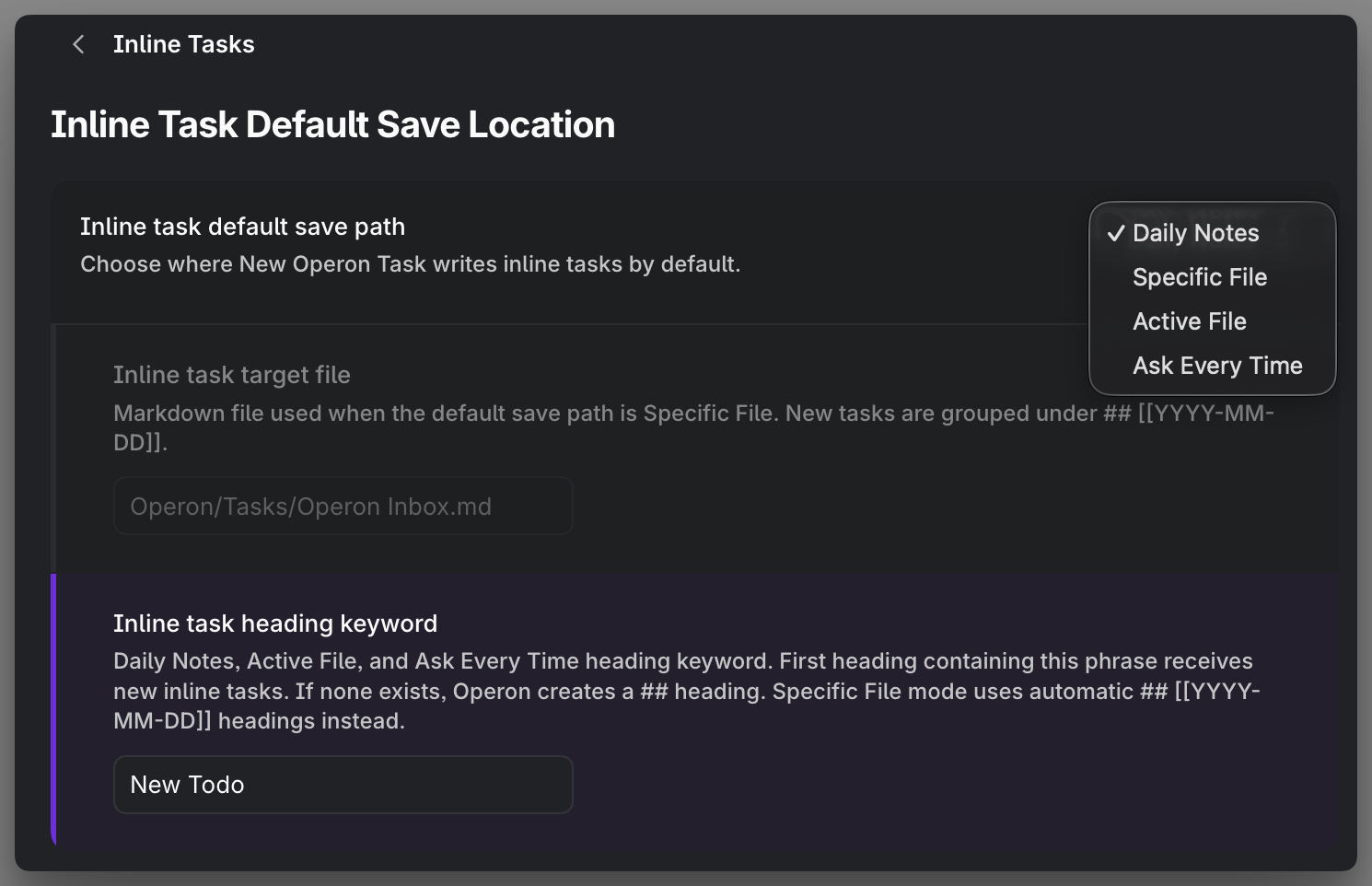
1. Where inline tasks are written
Open Tasks → Task Router and decide where a new inline task goes when there is no obvious target. Choose Daily Notes, Weekly Notes, a specific file, the active file, or Ask Every Time. This is the difference between quick capture landing somewhere sensible and tasks scattering unpredictably. See Task Router.
MEDIA-DOCS-008-2: The Tasks settings where the inline-task capture target is chosen.
2. Where file tasks are created
In the same Task Router page, check the File Task default folder, pipeline-specific folders, parent-aware placement, and archive destinations. A File Task is a real Markdown note, so its working and terminal folders matter for how your vault stays organized. Decide the basic rules before you create many File Tasks.
3. Your pipeline and statuses
Open the Pipelines tab and look at the workflow stages a task moves through. These are the columns you will see on the Kanban. You do not have to perfect them on day one, but the first status names should already make sense to you. See Pipelines and statuses.
4. Priorities
Open the Priority tab and confirm the priority levels match how you actually rank work. Priority drives sorting and filtering later. See Task priorities.
5. Key mappings (property names)
Open the Keymapping tab. Key mappings connect each Operon field to the property name written in your Markdown, both inline {{key:: value}} and file-task frontmatter. If you already have a property naming style in your vault, align it here so the same field means the same thing everywhere. See Key mappings, and Custom keys if you need a field the defaults do not cover.
MEDIA-DOCS-008-3: The Keymapping tab mapping canonical fields to visible property names.

A good first pass
- Set the inline-task capture target.
- Set the file-task location.
- Glance at your pipeline and status names.
- Glance at your priority levels.
- Align key mappings with your property naming, if you have one.
That is enough. You can refine any of these later without breaking existing tasks.
Next step
With the basics in place, make something. See Create your first task.